EXPERIENCE
DESIGN RESEARCH, QUALITATIVE RESEARCH
COMPANY
THE LEGO GROUP
MY ROLE
RESEARCHER & DESIGNER IN A 3-PERSON TEAM
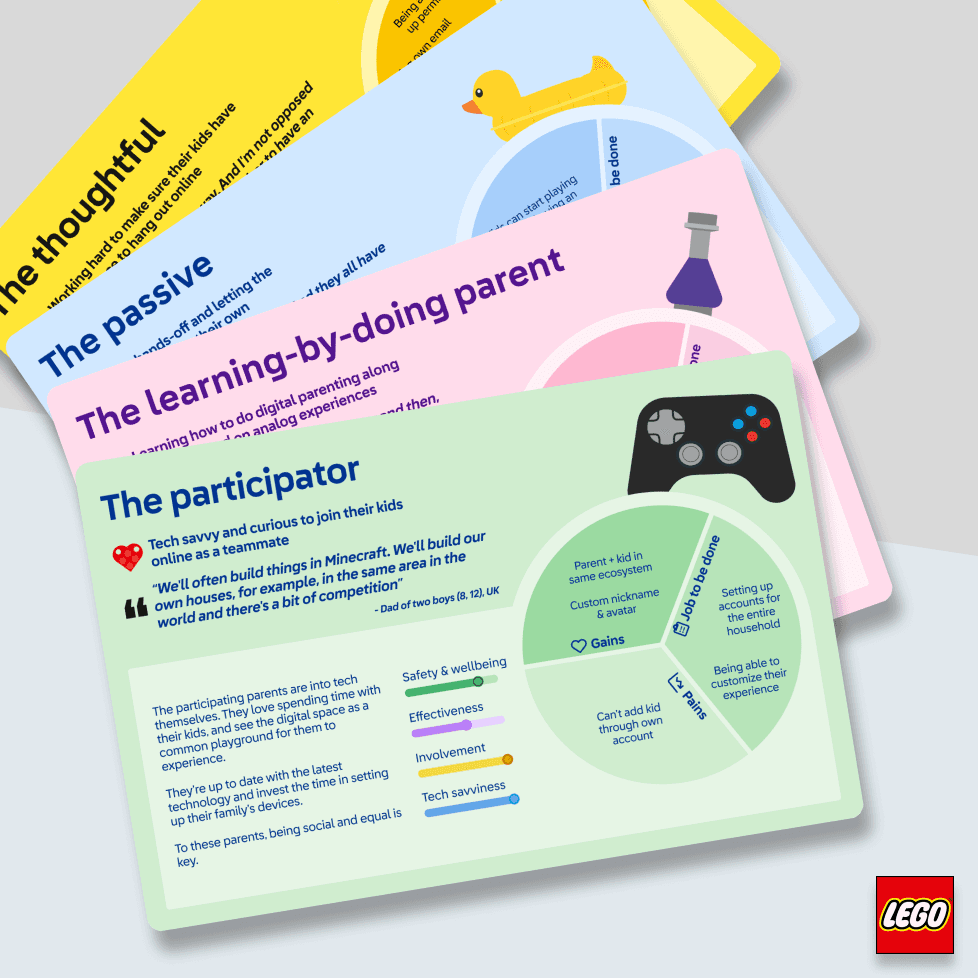
Archetype Cards for the LEGO Group
Study objective:
This project explored the everyday experiences of parents raising digital-native children, focusing on the challenges they face, the strategies they develop, and how they define successful parenting in a digital age. These insights were synthesized into four digital parenting archetypes, providing the design team with a clearer understanding of different parental mindsets and priorities to inform future design decisions.
Methodology:
To understand how parents navigate raising digital-native children, we conducted an exploratory qualitative research study combining in-depth conversations with a participatory prioritization exercise. This approach allowed us to capture both parents’ lived experiences and how they prioritize different aspects of their children’s digital play.
Research approach
Exploratory qualitative user research focused on parents of digital-native children
Methods
Semi-structured interviews to explore parents’ experiences, challenges, and definitions of successful parenting in a digital age
Prioritization card sorting exercise where participants ranked key themes from most to least important
Follow-up discussion to understand the motivations behind participants’ rankings
Analysis
Cross-participant comparison of interview insights and prioritization patterns
Matrix mapping to identify similarities and differences between parents
Synthesis of findings into four digital parenting archetypes
Designing the archetype cards
While the research was conducted as a team, I designed the archetype cards used by the design teams. My goal was to translate the research insights into a format that could be easily referenced during everyday design discussions.
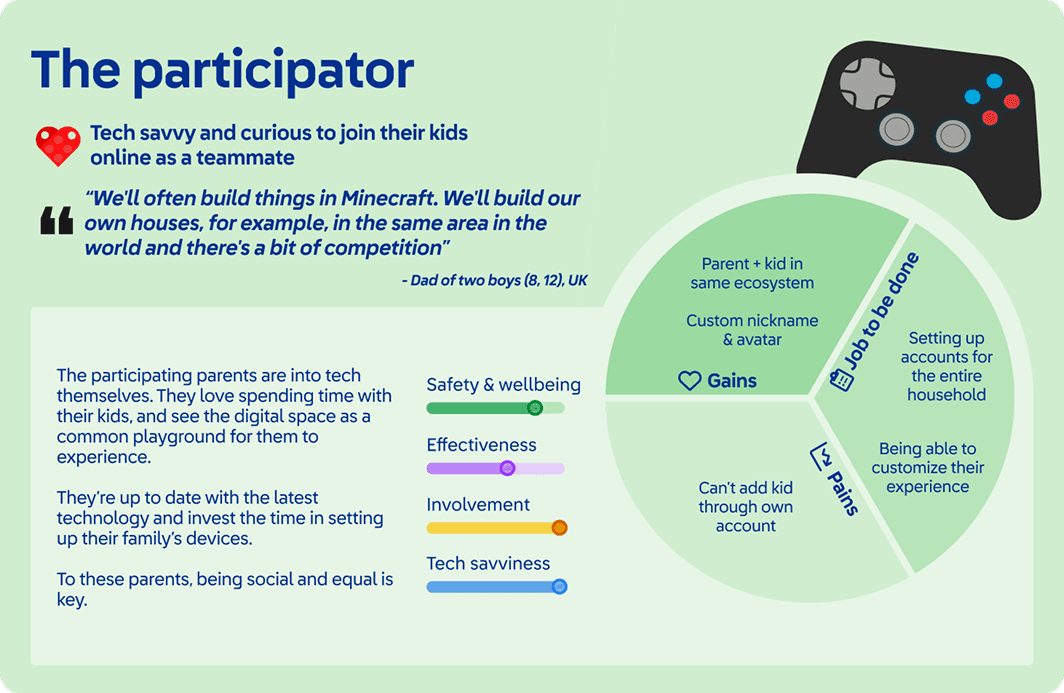
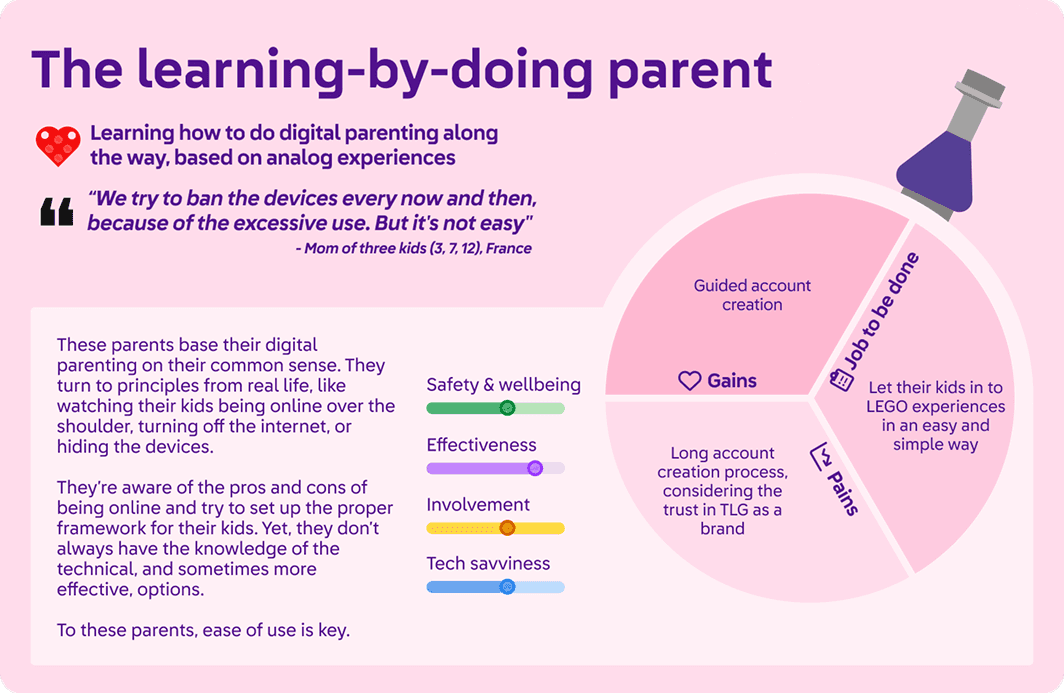
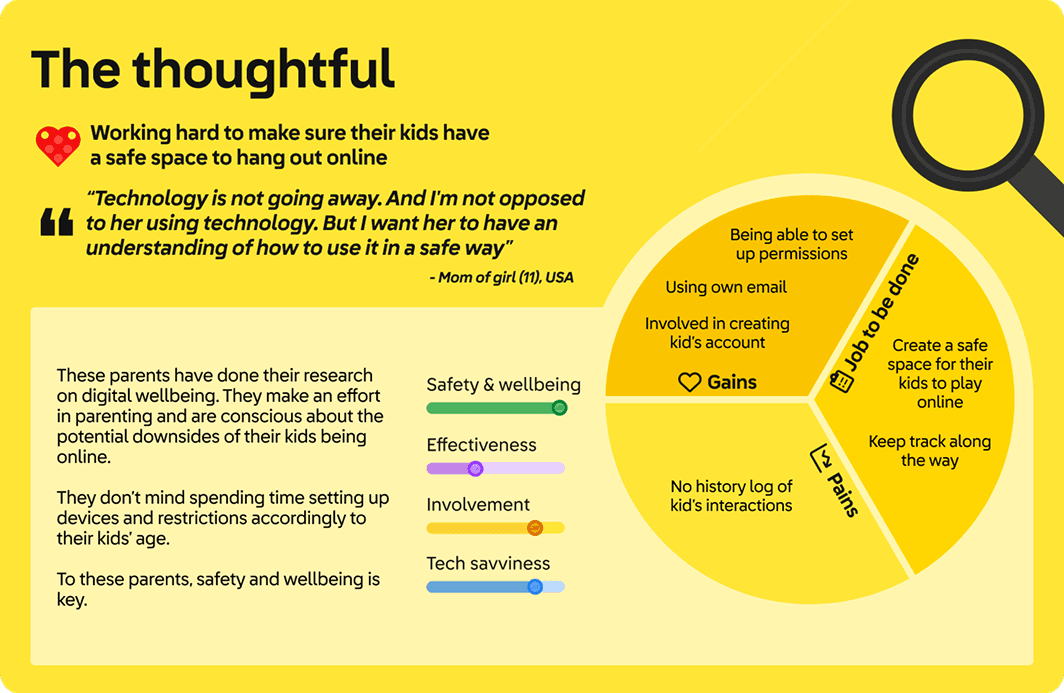
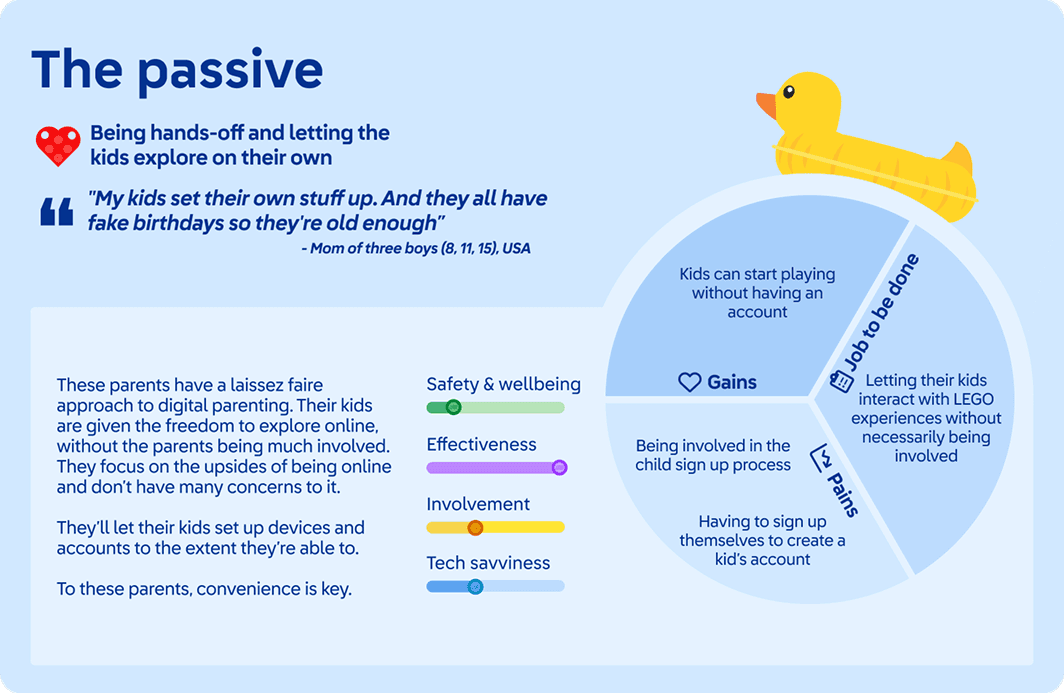
Each archetype was given a distinct color and visual marker (such as a gaming controller or magnifying glass) to make the different parent types easy to recognize at a glance and remember them by. The cards also include a representative quote, a short description of the parent mindset, and key priorities that shape their decisions.
I intentionally designed the cards with small, modular information elements so designers could quickly reference specific aspects, such as motivations, pains, or priorities, without needing to revisit the entire research report. This made the archetypes easier to integrate into workshops, design critiques, and everyday product discussions.
Results:
The research revealed clear differences in how parents approach raising children in a digital world, particularly in terms of involvement, tech savviness, and attitudes toward digital play. By synthesizing interview insights and prioritization patterns, we identified four distinct digital parenting mindsets:
The Learning-by-doing Parent,
The Participator
The Thoughtful Parent
The Passive Parent.
These archetypes translate qualitative insights into practical tools for design teams. Each archetype highlights key motivations, concerns, and priorities, allowing designers to quickly consider different parental perspectives when developing digital experiences for families. By grounding design discussions in real user behaviors and attitudes, the archetypes help teams move beyond assumptions and make more informed, human-centered design decisions.