ROLE:
CREATOR AND PRIMARY RESEARCHER
METHODS:
OBSERVATIONAL RESEARCH, FRAMEWORK DEVELOPMENT, RELIABILITY TESTING
MASTER'S PROJECT 2025
MASTER'S PROJECT 2025
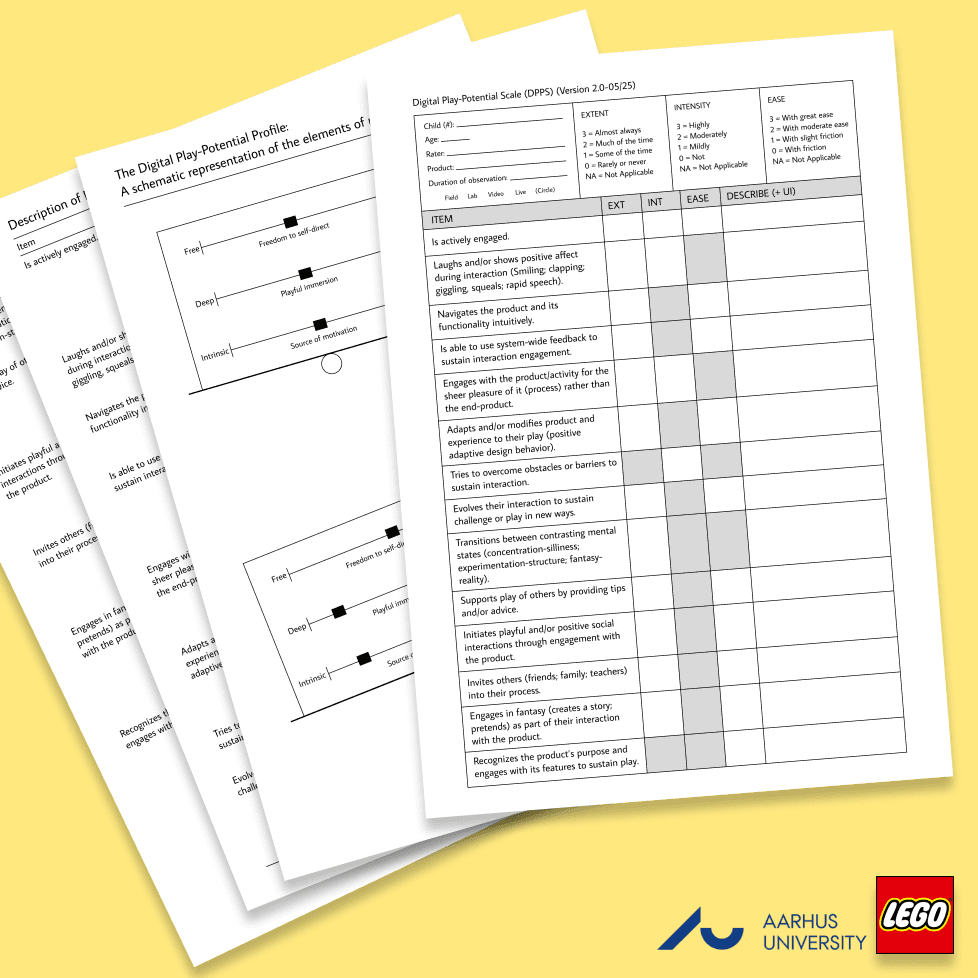
The Digital Play-Potential Scale (DPPS)
The framework:
The Digital Play-Potential Scale (DPPS) is an observational research framework I developed to evaluate the quality of play in digital play experiences for children. It translates principles from play science, psychology, and human-computer interaction into a structured tool that helps researchers and designers assess how well a digital experience supports meaningful play.
Inspired in part by Anita Bundy’s 'Test of Playfulness', the DPPS adapts structured observational assessment to the context of interactive digital products. The framework was designed to support rapid, iterative product testing while remaining simple enough for designers with limited research training to use.
Initial testing of the framework achieved “almost perfect” inter-rater reliability (Cohen’s κ = 0.8125).
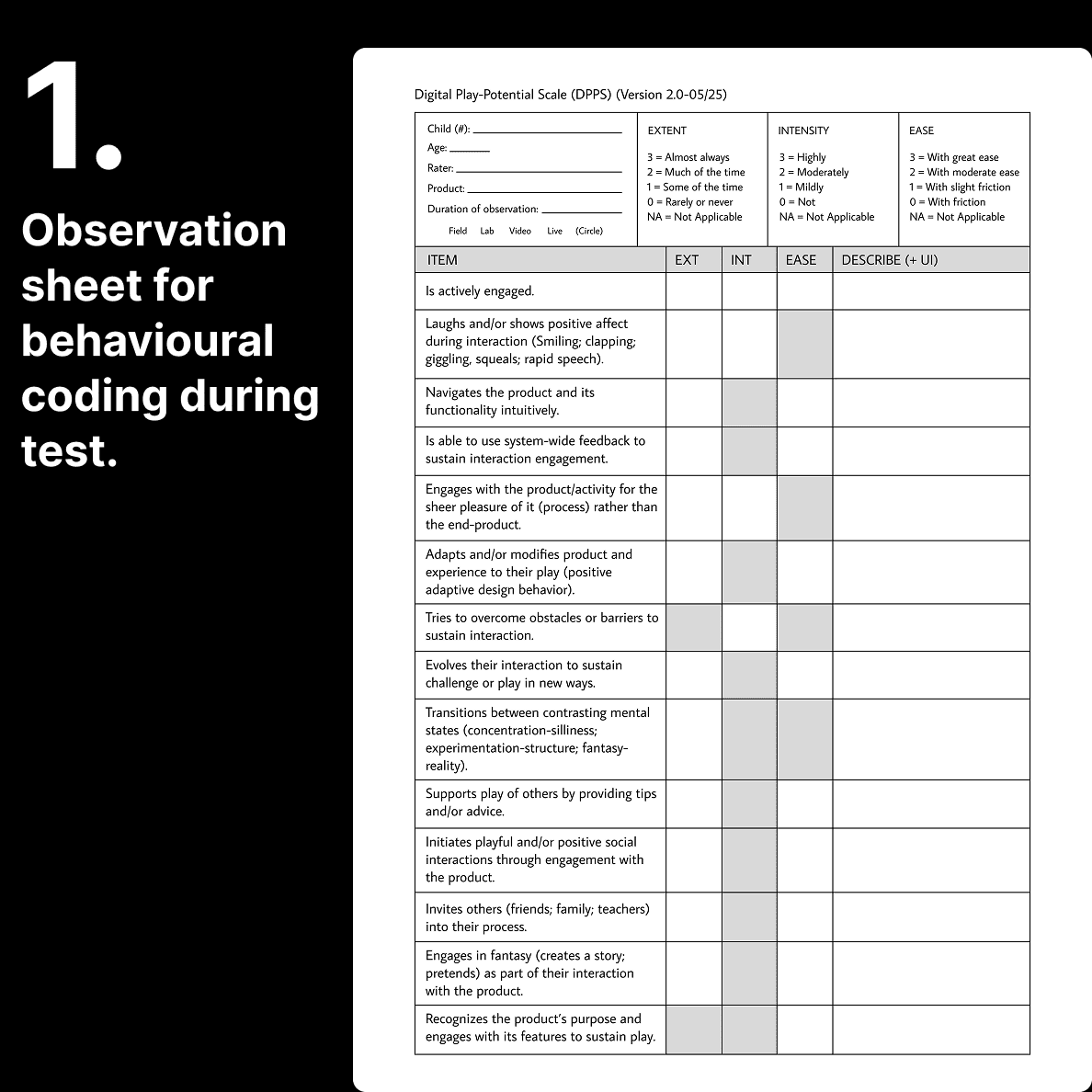
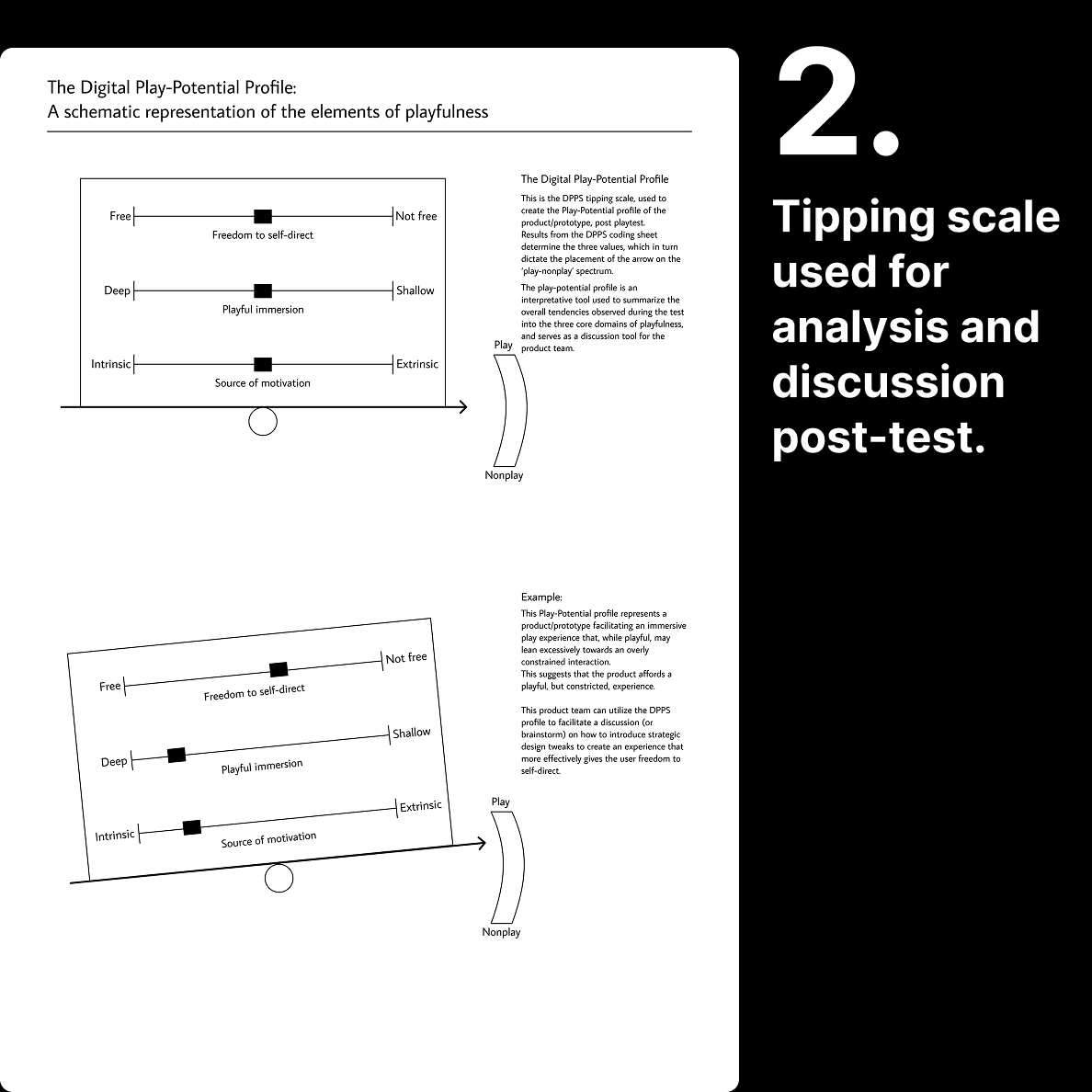
The DPPS consists of a coding sheet used during observational studies and a Play-Potential Profile used during analysis.
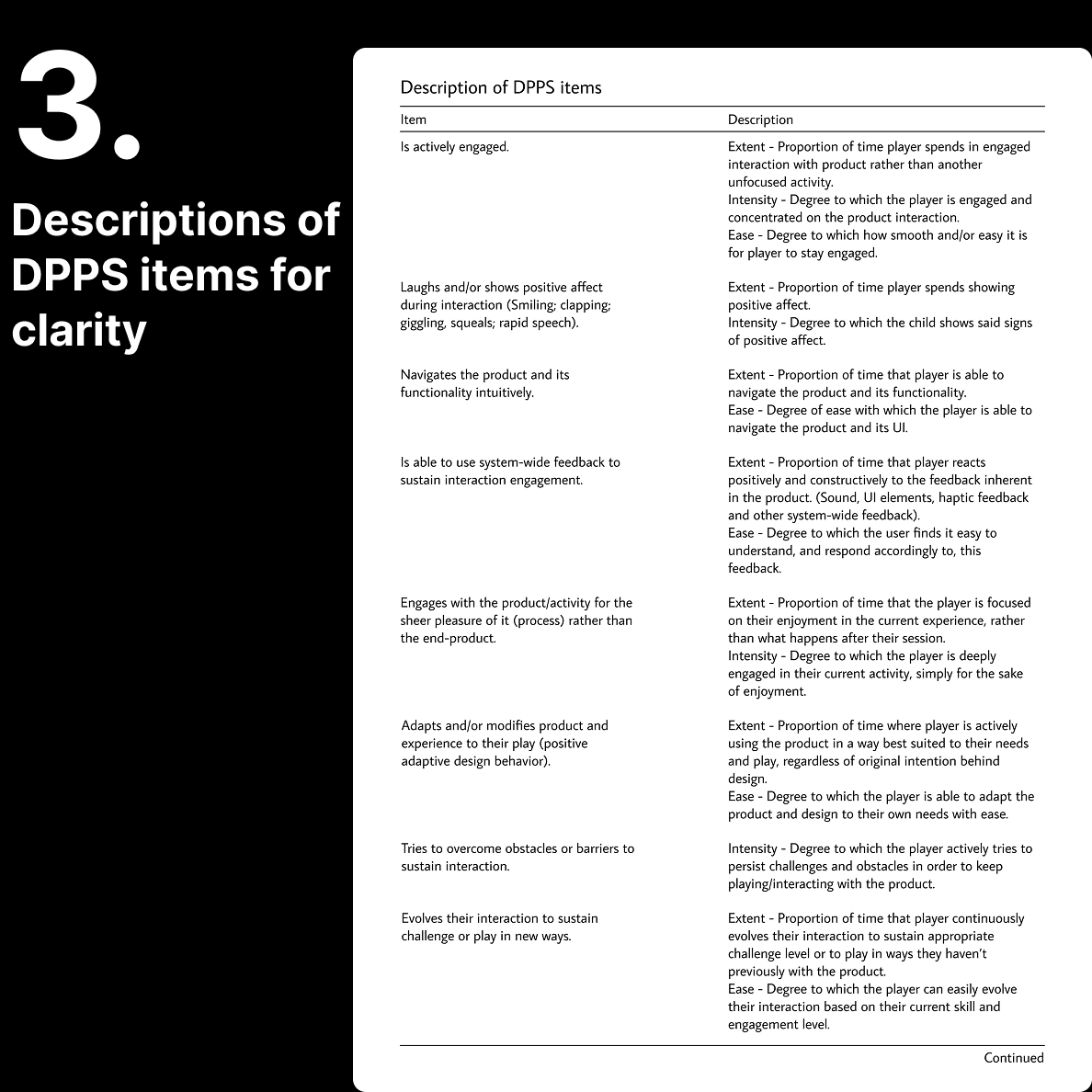
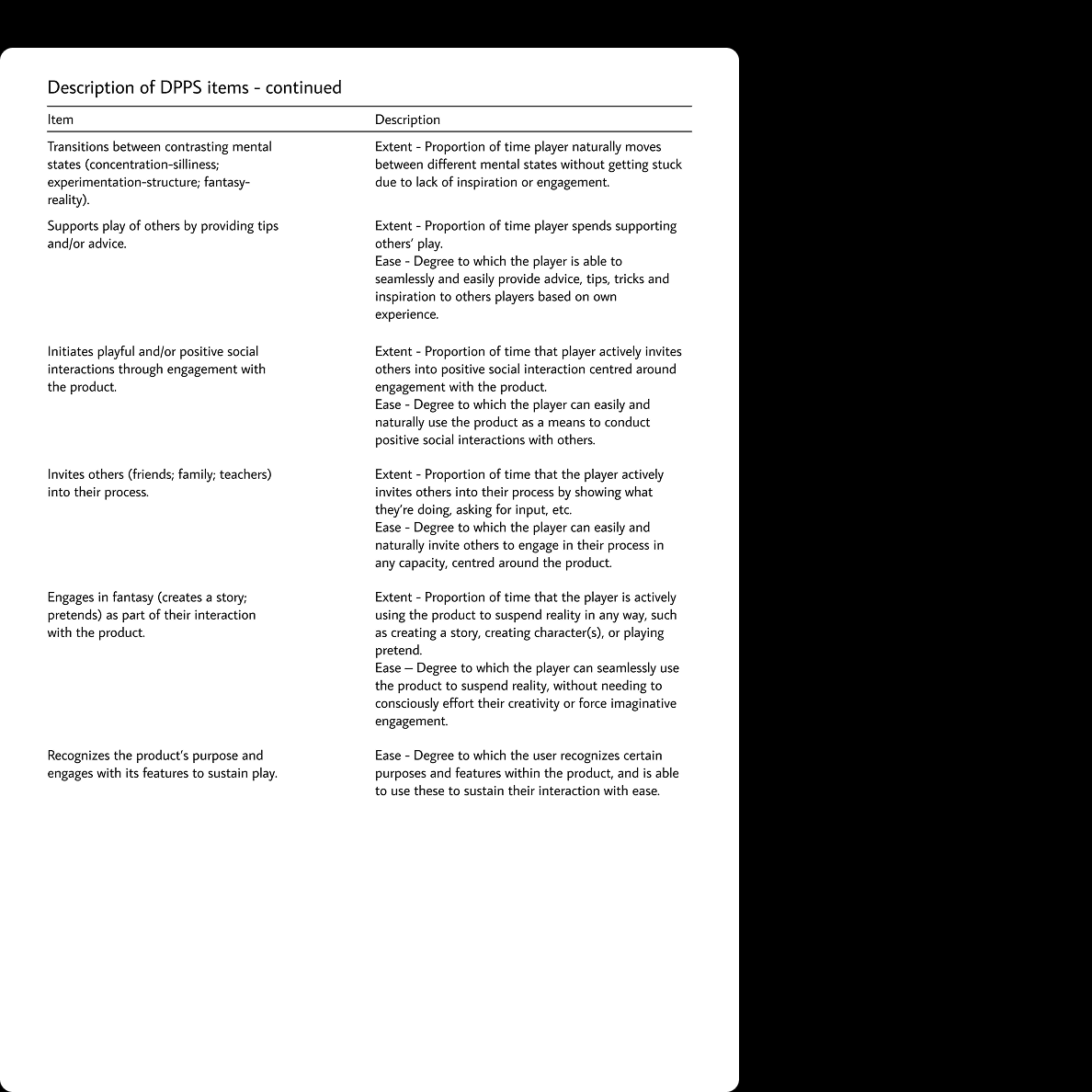
During observation, researchers rate multiple behavioral indicators of play (e.g. engagement, positive affect, adaptive interaction, imaginative play, social interaction) across three dimensions:
Extent: How frequently the behavior occurs
Intensity: How strongly the behavior is expressed
Ease: How naturally the experience supports the behavior
These ratings are then translated into a Play-Potential Profile, which visualizes how the product supports three core dimensions of playful experience:
Freedom to self-direct
Playful immersion
Source of motivation (intrinsic vs extrinsic)
The profile provides a quick overview of the quality of play supported by the experience and helps identify where design improvements may be needed.
Research & Development process:
To develop the DPPS, I:
conducted literature reviews across play science, HCI, and observational research methodology
translated theoretical principles of play into observable behavioral indicators
created items for the structured coding sheet used in field-based observation
iteratively refined the framework based on testing feedback and observed limitations
developed supporting materials to improve usability for both researchers and designers
Detailed item descriptions were created to ensure consistent interpretation between raters and improve reliability.
Impact:
The DPPS provides teams with a structured way to evaluate digital play experiences, bridging the gap between usability testing and play research.
It enables:
faster iterative testing during product development
more consistent observational analysis across researchers
accessible research methods for designers without formal research training
more informed discussions about play quality during product design
The Play-Potential Profile can also act as a discussion tool for product teams, helping identify where an experience may be overly constrained, insufficiently immersive, or lacking intrinsic motivation.